Ajanta and Ellora Caves: A Complete Travel Guide
Maharashtra is home to some of India's most extraordinary historical treasures, and the Ajanta and Ellora Caves are among its most celebrated attractions. Carved into rocky hillsides, these remarkable monuments showcase centuries of artistic achievement, religious devotion, and architectural innovation.
The Ajanta Caves are renowned for their Buddhist murals, paintings, and monasteries, while the Ellora Caves are famous for their impressive collection of Buddhist, Hindu, and Jain monuments. Together, they offer an unforgettable journey into India's ancient cultural and spiritual heritage.
Recognized as UNESCO World Heritage Sites, both cave complexes attract history enthusiasts, architecture lovers, photographers, students, and travellers from around the world.
If you are planning a trip to Maharashtra, this guide covers the history, major attractions, best time to visit, tickets, transport options, and travel tips for exploring Ajanta and Ellora.
Where Are Ajanta and Ellora Caves Located?
Both cave complexes are located in Maharashtra, but they are in different areas and require separate visits.
Ajanta Caves are situated near the village of Ajanta in the Chhatrapati Sambhajinagar region of Maharashtra. They lie in a horseshoe-shaped gorge along the Waghora River.
Ellora Caves are located near Verul village, approximately 30 kilometres from Chhatrapati Sambhajinagar city. The site is known for its monumental rock-cut temples and monasteries.
Chhatrapati Sambhajinagar, formerly known as Aurangabad, is the main travel base for visitors exploring Ellora and the wider region. Ajanta is farther away and generally requires a separate day trip.
History of the Ajanta Caves
The Ajanta Caves are a group of approximately 30 Buddhist caves created over several centuries. Their development is generally divided into two major phases: an earlier phase dating from around the second and first centuries BCE, and a later phase that flourished from around the fifth century CE.
The caves served as Buddhist monasteries, prayer halls, and places of religious learning. Monks lived, studied, and meditated here, while artists decorated the interiors with elaborate paintings and sculptures.
Ajanta is particularly famous for its depictions of the life of Buddha and stories from the Jataka tales, which recount the Buddha's previous lives. The paintings reveal details about ancient clothing, jewellery, courtly life, religious beliefs, and artistic techniques.
The caves became less prominent over time and were brought to wider modern attention after their rediscovery by a British officer in 1819. Today, they are among the most important surviving examples of ancient Indian Buddhist art.
Major Attractions at Ajanta Caves
1. Ancient Buddhist Paintings
Ajanta's paintings are among the site's greatest treasures. They feature religious narratives, royal figures, attendants, animals, flowers, and scenes from everyday life.
Their expressive faces, intricate details, and use of colour demonstrate the remarkable skills of the artists who worked in the caves. Visitors should avoid touching painted surfaces, as the artwork is fragile and requires careful preservation.
2. Cave 1
Cave 1 is well known for its celebrated Bodhisattva paintings, including the figures commonly identified as Padmapani and Vajrapani. The cave also features detailed decorative work and sculptural elements.
3. Cave 2
Cave 2 is noted for its painted ceilings, decorative patterns, and Buddhist imagery. It offers a glimpse into the elaborate artistic traditions that flourished at Ajanta.
4. Cave 16
Cave 16 is an important monastic cave containing sculptural and painted elements associated with Buddhist traditions. It is also known for inscriptions that help researchers understand the history of the complex.
5. Cave 26
Cave 26 is a major prayer hall featuring a large sculpted reclining Buddha associated with the Buddha's Mahaparinirvana. Its impressive carvings make it one of the most memorable stops for visitors interested in Buddhist sculpture.
History of the Ellora Caves
The Ellora Caves form a spectacular complex of 34 principal caves and monuments created between approximately the sixth and tenth centuries CE.
Unlike Ajanta, which is primarily Buddhist, Ellora includes Buddhist, Hindu, and Jain monuments. This combination makes the site an exceptional illustration of India's diverse religious and artistic traditions.
The caves were carved into the Charanandri Hills and include monasteries, shrines, halls, sculptures, and elaborate temple complexes. Their scale and variety reveal the extraordinary technical knowledge of the craftsmen who shaped the rock.
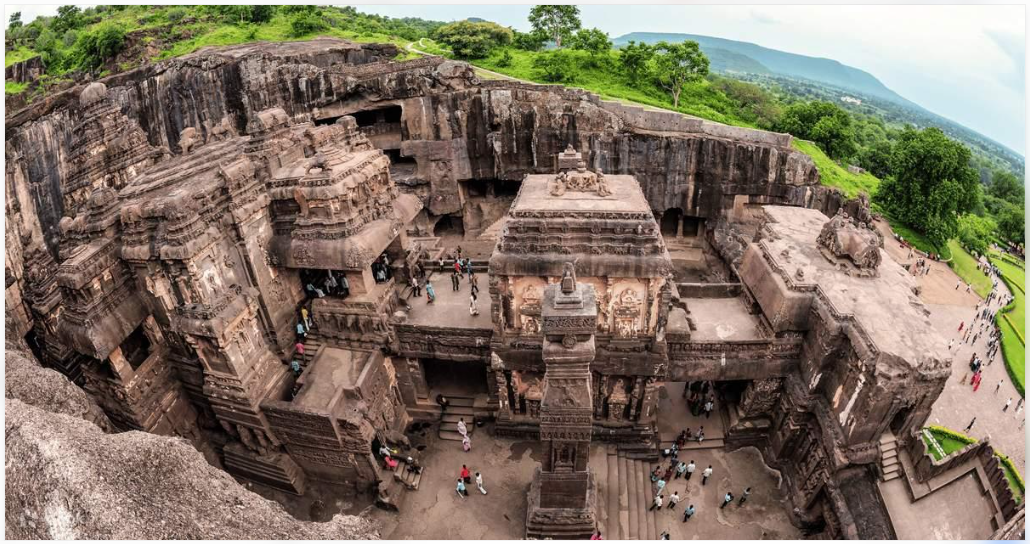
Ellora is especially famous for the Kailasa Temple, a monumental structure carved from a single rock mass. The site remains one of India's most impressive examples of rock-cut architecture.
Major Attractions at Ellora Caves
1. Kailasa Temple — Cave 16
The Kailasa Temple is the most famous monument at Ellora. Dedicated to Lord Shiva, it is a remarkable example of rock-cut architecture.
Instead of assembling the temple from separate blocks, artisans carved the monumental structure from the surrounding rock. The complex features gateways, pillars, courtyards, sculptures, and elaborate reliefs inspired by Hindu traditions.
Its enormous scale and intricate workmanship make it a highlight of any visit to Ellora.
2. Buddhist Caves
Ellora's Buddhist caves include monasteries and prayer spaces with carved pillars, Buddha figures, and decorative details. They provide insight into the religious life and architectural traditions of Buddhist communities in the region.
3. Hindu Caves
The Hindu caves feature elaborate sculptures and scenes associated with Hindu deities and sacred stories. Several monuments contain representations of Shiva, Vishnu, and other figures from Hindu traditions.
4. Jain Caves
The Jain caves are known for their detailed carvings, elegant pillars, and religious imagery. Although generally smaller than the monumental Kailasa Temple, they display considerable artistic refinement and craftsmanship.
5. Cave 10 — Vishvakarma Cave
Cave 10, often called the Vishvakarma Cave or Carpenter's Cave, is a notable Buddhist prayer hall. Its vaulted ceiling and large Buddha sculpture make it one of the most distinctive caves in the complex.
Ajanta vs Ellora: What Is the Difference?
| Feature | Ajanta Caves | Ellora Caves |
|---|---|---|
| Main religious traditions | Buddhist | Buddhist, Hindu, and Jain |
| Famous for | Murals, paintings, monasteries | Rock-cut temples and sculptures |
| Approximate number | 30 caves | 34 principal caves and monuments |
| Historical development | Around 2nd century BCE to 6th century CE, across major phases | Around 6th to 10th centuries CE |
| Major highlight | Buddhist paintings and Cave 26 | Kailasa Temple, Cave 16 |
| Location | Ajanta region, Maharashtra | Near Verul, close to Chhatrapati Sambhajinagar |
Both sites are worth visiting. Ajanta is especially rewarding for visitors interested in paintings and Buddhist history, while Ellora stands out for its architectural variety and monumental rock-cut temple.
Best Time to Visit Ajanta and Ellora Caves
The caves can generally be visited during much of the year, but the weather can significantly affect comfort and sightseeing.
Winter: October to February
Winter is often a comfortable season for exploring the caves. Daytime temperatures are usually more suitable for walking around the complexes, although mornings and evenings can be cool.
This is a popular period for sightseeing, so allow enough time for travel and entry procedures.
Summer: March to May
Summer can be very hot in Maharashtra, particularly during the afternoon. Visitors should start early, carry water, wear comfortable clothing, and take breaks in shaded areas where permitted.
Monsoon: June to September
The monsoon brings rainfall that can make the surrounding hills and countryside especially scenic. However, wet paths and changing weather may affect access and walking conditions.
Check local weather forecasts and official visitor advisories before setting out.
Best overall recommendation: October to February is often a comfortable period for visiting both cave complexes.
Opening Hours and Ticket Information
Opening days, visiting hours, ticket prices, and entry conditions can change. Check the official Archaeological Survey of India (ASI) or authorized ticketing information before travelling.
When planning your visit, confirm:
-
Current opening and closing times
-
Weekly closure days for each site
-
Indian and foreign visitor ticket categories
-
Any applicable camera or photography rules
-
Special access restrictions or conservation closures
Do not assume that the two sites follow identical schedules. Plan your travel between Ajanta and Ellora carefully, especially if you have limited time.
How to Reach Ajanta and Ellora Caves
By Air
Chhatrapati Sambhajinagar Airport is the most convenient airport for exploring Ellora and the surrounding region. Flight availability depends on the route and season.
From the airport, travellers can arrange taxis or other local transport to their hotel and onward sightseeing destinations.
By Train
Chhatrapati Sambhajinagar railway station connects the city with several destinations across India. From the station, visitors can arrange taxis, buses, or private transport to Ellora and other attractions.
For Ajanta, travellers generally need a separate road journey from the city.
By Road
Ellora is approximately 30 kilometres from Chhatrapati Sambhajinagar, while Ajanta is roughly 100 kilometres away, depending on the route and starting point.
Taxis, private vehicles, organized tours, and some bus services can be used to reach the sites. Travel times vary with traffic and road conditions.
Because Ajanta and Ellora are separated by a substantial distance, visiting both in one day can feel rushed. If possible, allocate separate days to appreciate each site properly.
Suggested 2-Day Ajanta and Ellora Itinerary
Day 1: Explore Ajanta Caves
-
Start early from Chhatrapati Sambhajinagar.
-
Travel to Ajanta Caves and allow several hours for exploration.
-
Visit selected caves known for their paintings, sculptures, and prayer halls.
-
Follow site instructions to protect the ancient artwork.
-
Return to your accommodation in the evening.
Day 2: Explore Ellora Caves
-
Travel to Ellora in the morning.
-
Spend time at the Kailasa Temple and the surrounding cave complex.
-
Explore selected Buddhist, Hindu, and Jain monuments.
-
If time and transport allow, visit another nearby attraction before returning to the city.
This itinerary can be adjusted to suit your interests. Art lovers may want additional time at Ajanta, while architecture enthusiasts may prefer to spend longer exploring Ellora.
Nearby Places to Visit
1. Bibi Ka Maqbara
Located in Chhatrapati Sambhajinagar, Bibi Ka Maqbara is a historic mausoleum known for its Mughal-inspired architecture and gardens. It is often included in sightseeing itineraries around the city.
2. Daulatabad Fort
Daulatabad Fort is a historic hilltop fortification known for its strategic location, defensive structures, and panoramic views. It can be combined with an Ellora visit if you plan your timing carefully.
3. Grishneshwar Jyotirlinga Temple
Grishneshwar Temple, near Ellora, is one of the twelve Jyotirlingas associated with Lord Shiva. It is an important pilgrimage destination and can be visited alongside Ellora, subject to temple schedules and crowd conditions.
Visitors should dress respectfully and follow the temple's current rules for darshan and photography.
4. Chhatrapati Sambhajinagar City
The city serves as a convenient base for exploring Maharashtra's historical attractions. Visitors can explore local markets, regional cuisine, and additional heritage sites depending on their schedule.
Accommodation and Food
Chhatrapati Sambhajinagar offers a range of accommodation options, including budget hotels, guesthouses, and higher-end properties. Staying in the city makes it easier to organize transport to both cave complexes.
Food options are available in the city and around popular tourist areas, although facilities may be more limited at some points along the route. Carry drinking water and light snacks, and follow local guidance on food and waste disposal.
Book accommodation in advance during holidays and busy travel periods.
Essential Travel Tips
-
Start early: Allow enough time to explore the caves without rushing.
-
Wear comfortable shoes: You may need to walk considerable distances and climb steps.
-
Carry water: Keep hydrated, particularly during the hotter months.
-
Protect the artwork: Never touch, scratch, or mark the ancient paintings and sculptures.
-
Follow photography rules: Restrictions may apply in certain caves or areas.
-
Plan transport in advance: Ajanta and Ellora are not next to each other.
-
Check current ticket information: Confirm prices, opening hours, and weekly closures before departure.
-
Travel respectfully: These are important cultural and religious heritage sites.
-
Allow extra time: Crowds, traffic, and weather may affect your schedule.
-
Keep the sites clean: Dispose of waste responsibly and respect conservation instructions.
Frequently Asked Questions
1. Where are Ajanta and Ellora Caves located?
Both are in Maharashtra, India. Ajanta lies in the Ajanta region, while Ellora is near Verul village, approximately 30 kilometres from Chhatrapati Sambhajinagar.
2. Why are Ajanta and Ellora Caves famous?
Ajanta is renowned for its Buddhist paintings, murals, and monasteries. Ellora is famous for its rock-cut monuments representing Buddhist, Hindu, and Jain traditions, especially the Kailasa Temple.
3. Are Ajanta and Ellora UNESCO World Heritage Sites?
Yes. Both cave complexes are recognized as UNESCO World Heritage Sites for their outstanding cultural and artistic significance.
4. How many days are needed to visit both sites?
Two days are recommended, with one day for Ajanta and another for Ellora. Travellers with limited time may combine visits into a longer day, but the experience can be rushed because of the distance between the sites.
5. What is the best time to visit Ajanta and Ellora?
October to February is often comfortable for sightseeing. Summer can be very hot, while monsoon conditions may affect walking and transport.
6. Is photography allowed inside the caves?
Photography rules can vary by site and location within a complex. Follow current signs and instructions from site authorities, especially in areas containing fragile paintings.
7. Can I visit Grishneshwar Temple and Ellora on the same day?
Yes, many visitors plan them together because they are located close to one another. Check the temple schedule and allow enough time for both visits.