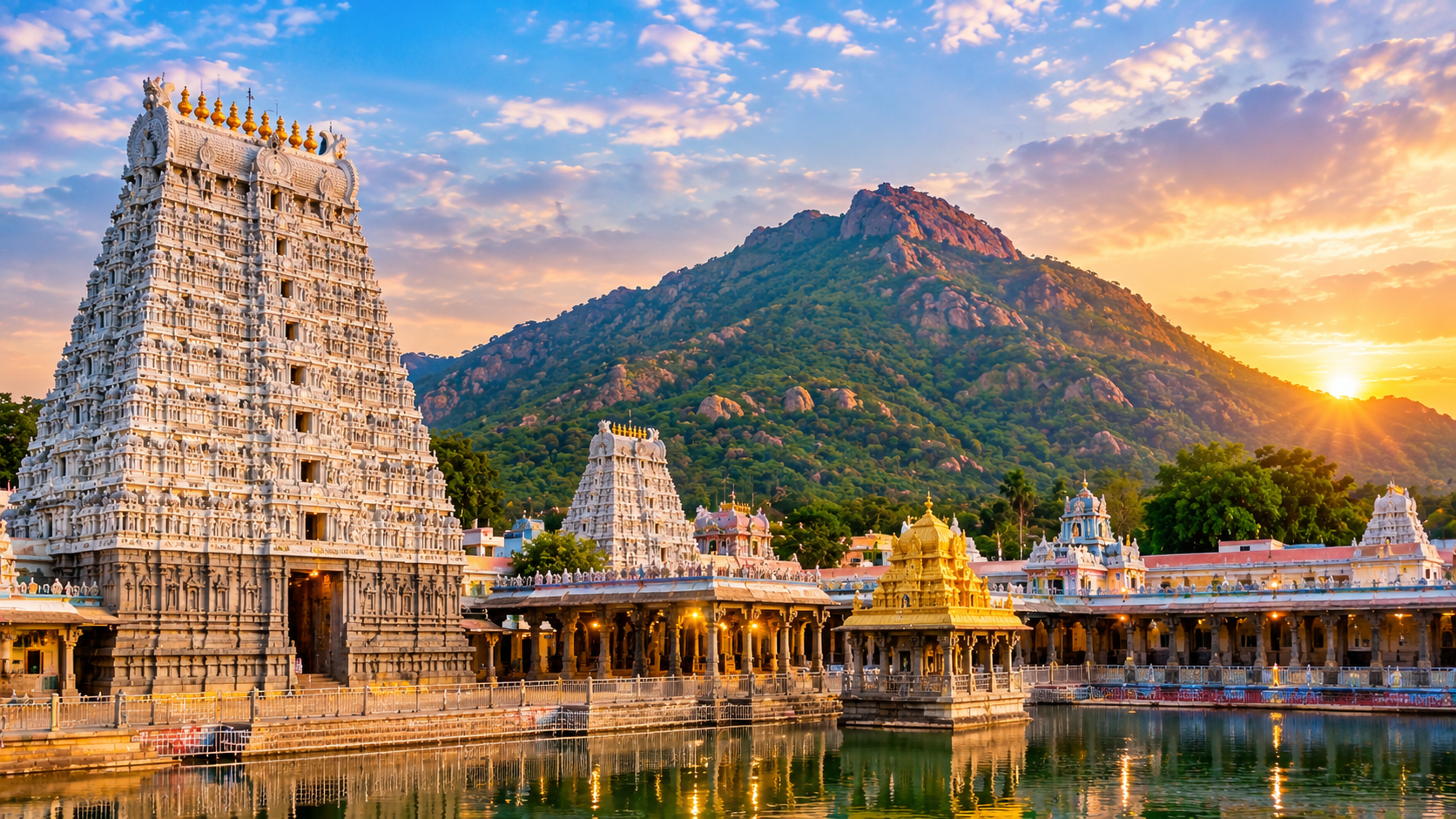
Arunachalam Temple, also known as Arunachaleswarar Temple or Annamalaiyar Temple, is one of the most sacred Hindu pilgrimage destinations in Tamil Nadu, India. Located in the spiritual town of Tiruvannamalai, at the foot of the magnificent Arunachala Hill, this ancient temple is dedicated to Lord Shiva and attracts devotees from across India and around the world.
Known for its impressive Dravidian architecture, towering gopurams, sacred traditions, and the famous Girivalam pilgrimage, Arunachalam Temple offers a deeply spiritual experience. The temple is particularly significant because it represents the element of fire among the five Pancha Bhoota Sthalams, the sacred Shiva temples associated with the five elements of nature.
Whether you are visiting to seek Lord Shiva's blessings, participate in the full-moon Girivalam, witness the spectacular Karthigai Deepam festival, or explore Tamil Nadu's cultural heritage, Tiruvannamalai is a destination worth experiencing.
History and Spiritual Significance of Arunachalam Temple
Arunachalam Temple has a rich religious and architectural history shaped by several South Indian dynasties, including the Cholas, Pandyas, and Vijayanagara rulers. The temple complex features monumental entrance towers, intricately carved stone structures, numerous shrines, and expansive courtyards.
According to Hindu tradition, Lord Shiva appeared as an endless column of fire to demonstrate that the divine cannot be measured or understood through pride and ego. The sacred Arunachala Hill is revered as a manifestation of Lord Shiva himself.
The temple is one of the Pancha Bhoota Sthalams, representing Agni, the element of fire. This association makes Tiruvannamalai an especially important destination for devotees of Lord Shiva.
The presiding deities are Lord Arunachaleswarar, another name for Lord Shiva, and Goddess Unnamulai Amman. Devotees visit throughout the year to offer prayers, participate in religious ceremonies, and experience the peaceful atmosphere of this sacred place.
Main Attractions at Arunachalam Temple
1. Annamalaiyar Temple
The principal attraction is the magnificent Annamalaiyar Temple, with its towering gopurams, ornate sculptures, and traditional Dravidian architecture.
The eastern Rajagopuram is one of the temple's most recognizable features. Visitors can explore the temple's designated worship areas, admire its architectural details, and experience its centuries-old religious traditions.
Allow sufficient time for darshan, especially during weekends, full-moon days, and festival periods when the number of pilgrims increases significantly.
2. Unnamulai Amman Shrine
The shrine dedicated to Goddess Unnamulai Amman is an important part of the temple complex. Devotees worship the goddess for blessings, prosperity, family well-being, and spiritual strength.
Visitors commonly include both the Lord Shiva shrine and the goddess shrine in their pilgrimage.
3. Arunachala Hill
Arunachala Hill rises dramatically behind Tiruvannamalai and is considered sacred by devotees. According to local religious tradition, the hill itself represents Lord Shiva.
The mountain is central to the town's spiritual identity and is closely associated with meditation, pilgrimage, and the Girivalam tradition.
4. Girivalam – The Sacred Walk Around Arunachala Hill
Girivalam, also known as Giri Pradakshina, is the traditional practice of walking around Arunachala Hill as an act of devotion to Lord Shiva.
The route is approximately 14 kilometres long and passes several shrines, lingams, and places of religious significance. Many pilgrims undertake Girivalam throughout the year, with especially large crowds on Pournami, or full-moon nights.
Tips for Girivalam:
-
Start during cooler hours, particularly in the evening or early morning.
-
Wear comfortable walking footwear where permitted, and follow local instructions regarding footwear at sacred areas.
-
Carry drinking water and plan rest stops.
-
Avoid the walk during extreme heat if you are unwell or not accustomed to long-distance walking.
-
Expect heavy crowds during full moons and major festivals.
Girivalam can be a memorable spiritual experience, but visitors should assess their fitness and allow enough time to complete the route comfortably.
5. Karthigai Deepam Festival
Karthigai Deepam is one of the most important annual festivals celebrated at Tiruvannamalai. Usually observed during the Tamil month of Karthigai, which falls around November or December, the festival celebrates the divine manifestation of Lord Shiva as a flame of light.
The highlight is the lighting of the enormous Maha Deepam on Arunachala Hill. The sacred flame can be seen from many parts of the surrounding region and draws large numbers of devotees.
The festival features temple rituals, religious processions, lamps, and a vibrant devotional atmosphere.
If you plan to attend Karthigai Deepam, arrange accommodation and transportation well in advance. Follow official announcements for the festival schedule, access restrictions, and crowd-management instructions.
Best Time to Visit Arunachalam Temple
Tiruvannamalai can be visited throughout the year, but the weather and festival calendar can influence your experience.
-
October to February: Often a comfortable period for temple visits and sightseeing, although festival dates can bring substantial crowds.
-
March to June: Temperatures can be high, making daytime sightseeing and long walks more challenging. Plan outdoor activities for cooler hours.
-
July to September: The landscape may be greener during the monsoon season, but rain can affect walking conditions and road travel.
-
Full-moon days: Particularly popular for Girivalam. Expect busy roads, crowded temple queues, and increased demand for accommodation.
-
Karthigai Deepam: Ideal for experiencing the region's major spiritual celebration, but advance planning is essential.
For a quieter visit, consider a regular weekday outside major festival periods.
Arunachalam Temple Timings and Darshan Information
The official temple website lists general darshan hours as approximately 5:30 AM to 8:00 PM. Entry arrangements may change on busy days, weekends, full-moon days, and during festivals.
Daily poojas and special religious services take place at designated times. The schedule and availability of particular services may vary.
Before your visit:
-
Confirm the latest darshan hours on the official temple website.
-
Check the current availability and fees for any special darshan or pooja.
-
Follow the temple's dress and conduct guidelines.
-
Allow extra time for security checks and queues during busy periods.
Official temple website: https://annamalaiyar.hrce.tn.gov.in/
How to Reach Arunachalam Temple
Tiruvannamalai is connected to several major cities in Tamil Nadu and neighbouring states by road and rail.
By Road
Travelling by road is a convenient option for many pilgrims. Buses, taxis, and private vehicles connect Tiruvannamalai with Chennai, Bengaluru, Vellore, and other regional destinations.
Road journeys may take longer during full-moon days and major festivals because of traffic and crowd-control arrangements.
By Train
Tiruvannamalai has a railway station serving the town. Check current train schedules and connections from your departure city before making travel arrangements.
Depending on the route, travellers may need to change trains at a larger railway junction.
By Air
Chennai International Airport is one option for visitors arriving from distant destinations. Bengaluru Airport may also be convenient depending on your starting point and flight availability.
From the airport, continue to Tiruvannamalai by road or a suitable rail connection.
Local Transportation
Auto-rickshaws, taxis, and other local transport options can help visitors travel between the temple, accommodation, ashrams, and nearby attractions. On full-moon days, expect heavier traffic and possible restrictions around the Girivalam route.
Places to Visit Near Arunachalam Temple
1. Sri Ramana Ashram
Sri Ramanasramam is associated with the spiritual teacher Ramana Maharshi and attracts visitors interested in meditation, self-inquiry, and contemplative traditions.
Its peaceful atmosphere makes it a meaningful addition to a Tiruvannamalai pilgrimage.
2. Virupaksha Cave
Located on Arunachala Hill, Virupaksha Cave is associated with Ramana Maharshi and is known as a quiet place for reflection and meditation.
Access involves walking on a hill path, so visitors should check current access conditions and consider their physical fitness before visiting.
3. Skandashramam
Skandashramam is another spiritual location on Arunachala Hill associated with Ramana Maharshi. The area offers a peaceful setting and views of the surrounding landscape.
The route may involve uneven or steep sections. Check local guidance before attempting the climb.
4. Sathanur Dam
Sathanur Dam is a popular regional excursion known for its reservoir and scenic surroundings. It can be considered for a longer visit if you have additional time in Tiruvannamalai.
Check local access conditions and visitor facilities before travelling.
Suggested Two-Day Arunachalam Temple Itinerary
Day 1: Temple and Spiritual Exploration
-
Arrive in Tiruvannamalai and check into your accommodation.
-
Visit Annamalaiyar Temple for darshan.
-
Explore the Unnamulai Amman shrine and other permitted areas of the temple complex.
-
Visit Sri Ramana Ashram if time allows.
-
Enjoy a relaxed evening and prepare for the following day's activities.
Day 2: Arunachala Hill and Girivalam
-
Begin the day early with a visit to a suitable viewpoint or accessible spiritual site around Arunachala Hill.
-
Visit Virupaksha Cave or Skandashramam if the paths are open and suitable for your fitness level.
-
Undertake Girivalam if you are prepared for the approximately 14-kilometre walk, or explore selected sections of the route.
-
Depart for your next destination after allowing sufficient time for rest and transport.
During full-moon days and major festivals, adjust this itinerary to account for crowds, road restrictions, and temple queues.
Accommodation and Food in Tiruvannamalai
Tiruvannamalai offers a range of accommodation options, including budget lodges, hotels, guesthouses, and ashram accommodation subject to their individual rules and availability.
For a convenient stay, consider accommodation within reasonable distance of the temple or along an accessible route to your planned attractions.
The town has restaurants serving South Indian vegetarian meals, tiffin dishes, snacks, and traditional Tamil food. You can find options suitable for breakfast, lunch, and dinner.
During full-moon periods and Karthigai Deepam, rooms may become scarce and prices may rise. Booking early is recommended.
Essential Travel Tips for Visitors
-
Check the official temple website before departure for the latest timings and announcements.
-
Dress modestly and respect the religious customs of the temple.
-
Follow all instructions regarding photography, mobile phones, footwear, and personal belongings.
-
Carry drinking water and sun protection, especially if you plan to undertake Girivalam.
-
Avoid strenuous hill walks during extreme heat or if you have health or mobility concerns.
-
Book accommodation in advance during festivals and full-moon periods.
-
Keep your belongings secure in crowded areas.
-
Allow extra travel time during major religious events.
-
Follow local guidance and stay on permitted paths when visiting Arunachala Hill.